Research

Ongoing research

Core themes driving our ongoing and future investigations.

Theme 1

DNA double-strand break repair & replication stress

Identifying new regulatory factors that govern DSB pathway choice

  • Molecular switches in repair: We investigate the mechanisms that govern how cells choose between error-free homologous recombination (HR) and error-prone pathways, such as non-homologous end-joining (NHEJ), after DNA damage.
  • Protein clearance at stalled replication forks: We focus on regulatory factors, including specialized ubiquitin ligases, that remove classic end-joining proteins from damaged DNA regions in S phase, allowing high-fidelity repair machinery to access the lesion.
  • Replication fork remodelling axis: We explore how cellular remodelers govern reversal and stabilization of replication forks facing structural blockades.

Intersection of DNA repair with transcription

  • Transcriptional programming under genotoxic stress: We study how transcriptomic shifts and gene expression profiles influence a cell's capacity to maintain DNA replication fork stability.
  • Coordination of cellular machinery: We examine how active transcription and metabolic signalling coordinate with recruitment of genome-stabilizing complexes at sites of replication stress.

Role of post-translational modifications

  • The ubiquitin and PARylation code: We map how PARylation and site-specific ubiquitylation act as allosteric switches that recruit and activate genome-maintenance factors.
  • Multilayered signalling controls: Beyond ubiquitylation, we study phosphorylation and SUMOylation that fine-tune repair proteins to safeguard DNA replication fork integrity.
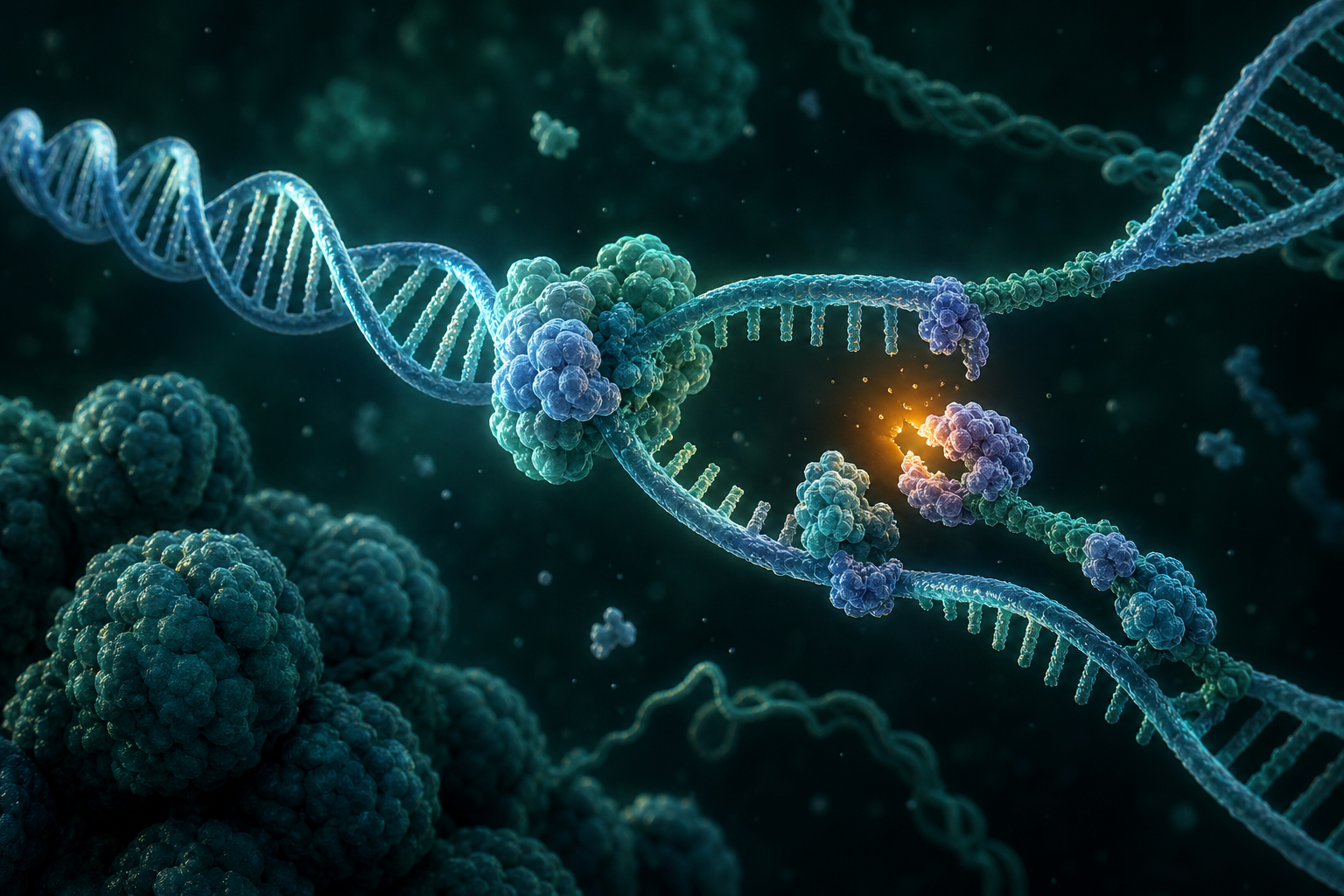
Illustration of DNA break repair, fork protection, and post-translational marks
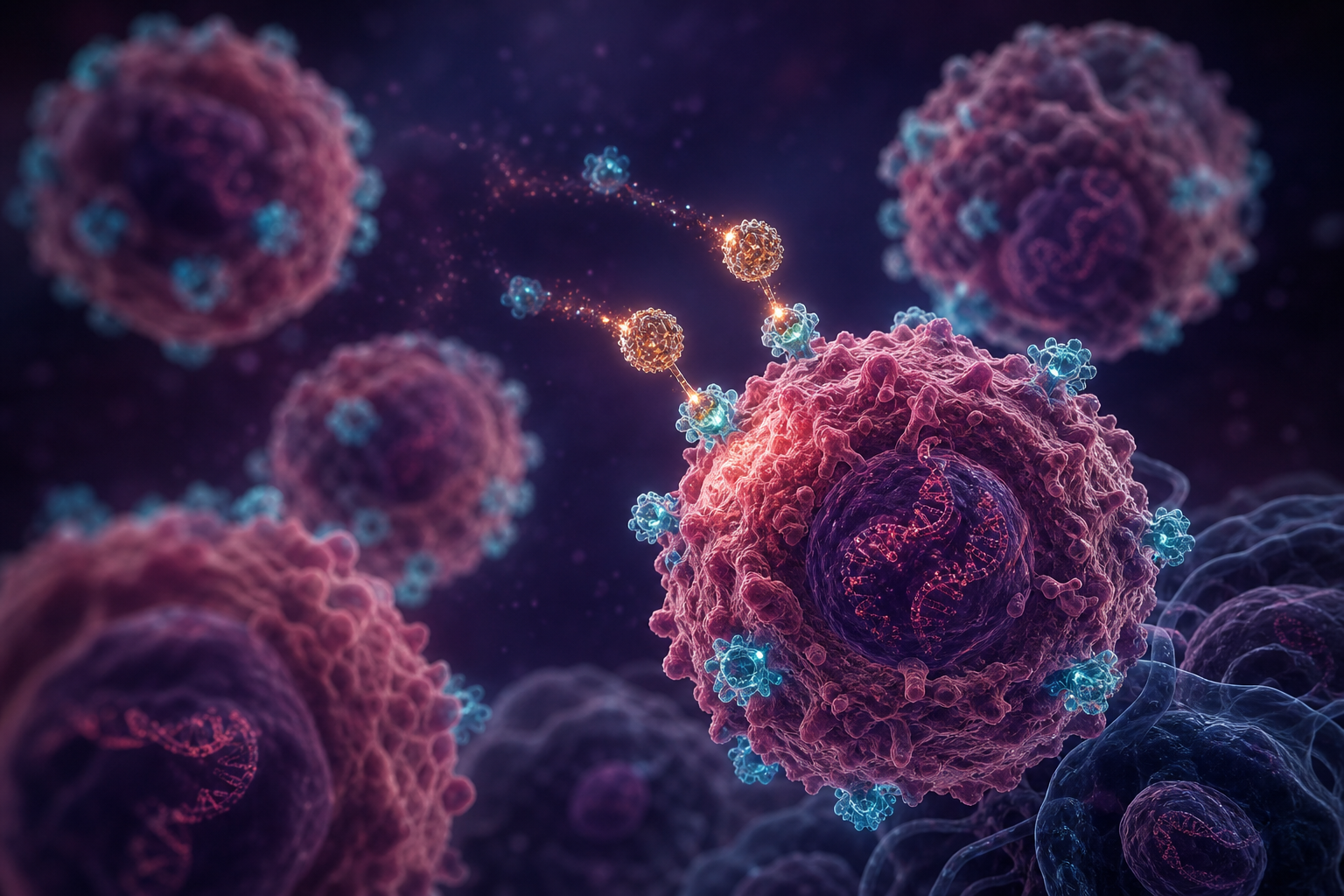
Illustration of cancer cell therapy targeting and biomarkers

Theme 2

Biology of multiple myeloma and ovarian cancer

Role of DNA replication stress

  • Adaptive survival mechanisms: We investigate how aggressive malignancies, especially Multiple myeloma and high-grade serous ovarian cancer, adapt to persistent replication stress induced by frontline chemotherapies.
  • DNA replication fork protection pathways: We explore how these cancers shield stalled replication forks from lethal nucleolytic degradation, thereby allowing continued proliferation.

Novel treatment strategies

  • Disrupting replication fork stabilization: We develop strategies to convert treatment-resistant, replication fork-stable tumour populations into vulnerable, replication fork-unstable ones.
  • Targeted combination therapies: We evaluate pairing alkylating agents with DNA-damaging inhibitors such as ATR-directed therapies to eliminate refractory cancer cells.
  • Preclinical translational pipelines: Using cellular and orthotopic in vivo models, we validate rational drug combinations for future clinical intervention.

New biomarkers for sensitivity to therapy

  • Functional biomarkers for patient selection: We leverage patient-derived biospecimens to test whether DNA replication fork protection status predicts therapeutic response.
  • Mapping the proteomic network: By characterizing proteomic landscapes unique to drug-resistant tumors, we aim to discover actionable biomarkers that guide personalized oncology.